
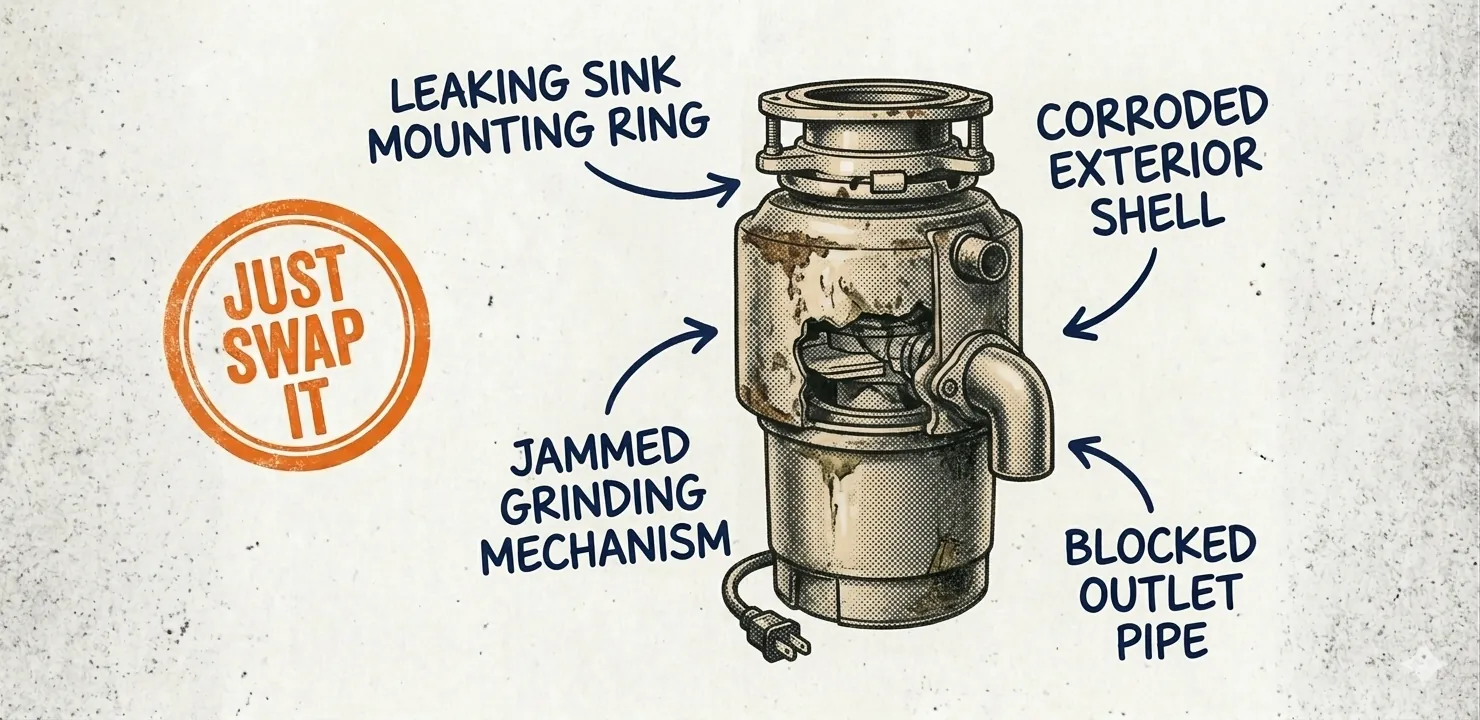
First question: where is the water actually coming from?
A garbage disposal leak is not one problem. It is a location problem. Top, side, and bottom leaks usually point to different things, and the fix-or-swap decision changes fast once you know where the water starts.
Start by drying the cabinet floor and the outside of the disposal. Run a little water. Watch from a safe distance with a flashlight. Do not stick your hands around a running disposal. Do not reach inside. You are looking, not wrestling the sink villain.
Top leaks: often a mounting or seal issue
If water shows up near the sink flange at the top of the disposal, the leak may be around the mounting assembly or putty seal. Sometimes the disposal is still fine, but the connection at the sink is not. That does not automatically mean replacement, but it does mean the unit has to be removed and reset correctly if the seal is failing.
This is where homeowners can lose a Saturday. You think it is one drip. Then the cabinet floor is wet, the disposal is heavy, and every old connection has an opinion.
Side leaks: dishwasher or drain connection
If water comes from the side, check the dishwasher inlet and discharge pipe. A loose clamp or drain connection can leak without the disposal body being bad. That is still worth taking seriously. Slow water inside a cabinet is not harmless. It hides, swells the floor, and makes everything smell like regret.
Moen has a useful support reference for identifying a leak underneath an existing garbage disposal. The big idea is the same: locate the source before deciding what the job is.
Bottom leaks: replacement territory
If the disposal leaks from the bottom of the unit, that is the one we do not love. Bottom leaks often mean the internal seal or body is failing. At that point, repairing the old unit usually makes less sense than replacing it.
This is where FSP's brand voice is not subtle: cut your losses, not your fingers. Swap it.
What to check before booking
Look for the reset button. Check whether the unit hums, stays silent, or spins. Look under the sink for the outlet or hardwired connection. Take photos of the disposal, the plumbing connections, and the cabinet floor. Those photos help us confirm whether it looks like a simple replacement or whether something else has to be handled first.
A straightforward garbage disposal installation usually works when the existing sink, drain, power, and dishwasher connection are already there. First-time installs, missing outlets, or major plumbing changes are a different scope.
The simple rule
Top leak: maybe seal or mount.
Side leak: maybe connection.
Bottom leak: usually time to stop negotiating.
If the disposal is leaking, humming, silent, or old enough to have earned its retirement, do not let it turn the cabinet into a science project. Don't fix it. Swap it.