
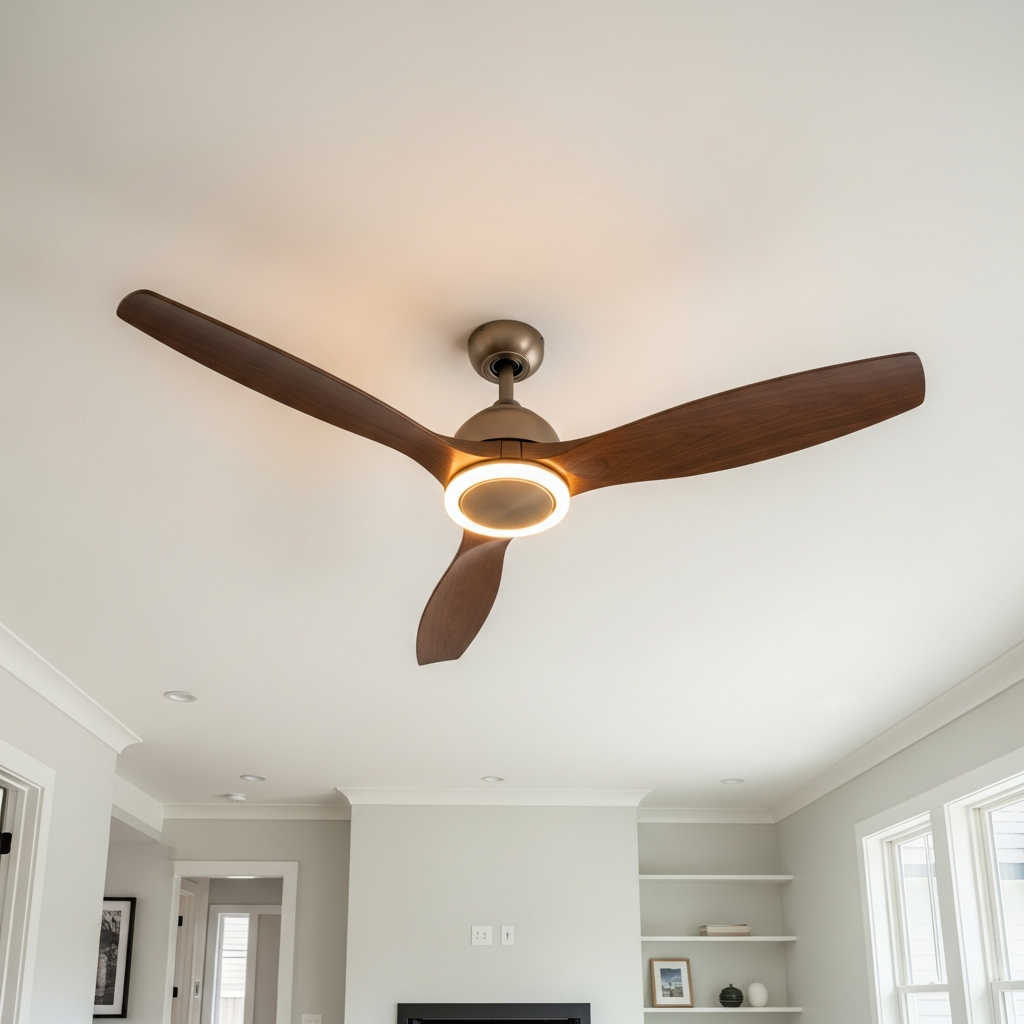
Most homeowners don't realize their ceiling fan has a reverse switch—and even fewer know how to use it properly. This simple adjustment can reduce your energy costs year-round.
The Science Behind Fan Direction
Ceiling fans don't actually cool the air. They create wind chill that makes you feel cooler by accelerating sweat evaporation. In winter, they can redistribute warm air that rises to the ceiling back down to living level.
The key is blade direction:
- Counter-clockwise (summer): Creates a downward breeze for cooling effect
- Clockwise (winter): Pushes air up, circulating warm air without creating drafts
Finding the Switch
Look for a small switch on the motor housing of your fan. It's usually on the side, between the blades and the light fixture (if equipped). Some newer fans have a remote control with a direction button instead.
Summer Settings (Counter-Clockwise)
When blades spin counter-clockwise (viewed from below), they push air straight down. This creates the cooling breeze that lets you set your thermostat 4-6°F higher while feeling just as comfortable.
Pro tip: Stand directly under the fan. You should feel air movement on your face and arms. If you don't, the fan is likely spinning the wrong direction.
Winter Settings (Clockwise)
In heating season, switch the fan to run clockwise at low speed. This creates an updraft that pushes warm air (which naturally rises) along the ceiling and down the walls, mixing it back into the room without creating an uncomfortable draft.
Important: Run the fan at the lowest speed in winter. You shouldn't feel any breeze—the goal is gentle circulation, not wind.
When to Make the Switch
- Spring (April/May): Switch to counter-clockwise as you start using A/C
- Fall (October/November): Switch to clockwise as heating season begins
Set a reminder on your phone or mark it on your calendar during daylight saving time changes—that's an easy way to remember.
Energy Savings Potential
According to the U.S. Department of Energy:
- Summer: Ceiling fans allow you to raise thermostat 4°F with no comfort reduction
- Winter: Proper fan use can reduce heating costs 10-15%
For an average household, that's $150-300 per year in savings from a switch flip that takes 5 seconds.
Signs Your Ceiling Fan Needs Replacement
If your fan wobbles, makes noise, or has stopped working reliably, it's time for an upgrade. Modern fans are:
- More energy-efficient (DC motors use 70% less power)
- Quieter
- Available with smart home integration
- Better balanced for less wobble
Ready for an Upgrade?
Whether you need a fan direction adjustment check or want to swap out an old unit for something better, we're here to help. Check our ceiling fan services or book an appointment.
Quick tip: When you contact us for a ceiling fan swap, we'll also show you how to use the direction switch correctly—it's part of our standard service.